Lake Whatcom Forest Management Plan
Thank you to everyone who shared their thoughts on Lake Whatcom's forests, including by taking our survey to provide input on the draft Lake Whatcom Forest Management Plan. The survey and comments are closed, and the feedback we received was integrated into the final plan. The final plan was adopted by the City and County Councils in 2026.
You helped shape the future of forests in the Lake Whatcom watershed
Community members who care about clean water, forest health, and outdoor recreation in the Lake Whatcom watershed provided feedback in 2025 during the development of our first-ever joint Lake WhatcomContinue reading
Thank you to everyone who shared their thoughts on Lake Whatcom's forests, including by taking our survey to provide input on the draft Lake Whatcom Forest Management Plan. The survey and comments are closed, and the feedback we received was integrated into the final plan. The final plan was adopted by the City and County Councils in 2026.
You helped shape the future of forests in the Lake Whatcom watershed
Community members who care about clean water, forest health, and outdoor recreation in the Lake Whatcom watershed provided feedback in 2025 during the development of our first-ever joint Lake Whatcom Forest Management Plan.
Whatcom County Parks and Recreation Department (County) and the City of Bellingham (City) worked together with ecological forestry consultants from Northwest Natural Resource Group (NNRG) to create a long-term plan that will protect water quality, improve forest health, and support responsible recreational access (where applicable) by guiding forest management across more than 13,000 acres of forests that we collectively manage in the Lake Whatcom watershed. This plan also helps advance the Forest Management program area within the 2025-2029 Lake Whatcom Management Program Work Plan.
Which forests are included?
- County-managed forest lands with recreational access: Whatcom County manages approximately 9,600 acres of parklands, including Lookout Mountain Forest Preserve and Lake Whatcom Park, which were reconveyed from the Washington State Department of Natural Resources. These areas support passive recreation activities such as hiking and biking.
- City-managed forest lands preserved for water quality: The City manages more than 3,500 acres of land acquired through the Lake Whatcom Land Acquisition and Preservation Program, which purchases land to prevent development and safeguard forests that protect Lake Whatcom, Bellingham's drinking water source. This program is ongoing, with new properties regularly added.
See an interactive map of these lands in the Lake Whatcom watershed. Any forests in the Lake Whatcom watershed that are not managed by the County or City - such as privately owned forests for timber harvest or forests managed by the Department of Natural Resources - are not included in this plan.
Why did we create this plan?
Since time immemorial, Lake Whatcom has played an important role in the quality of life for the people and ecosystems surrounding it. Its watershed was first inhabited and utilized by Coast Salish tribes, who cared for the land long before European settlers arrived and continue to use the watershed today. Lake Whatcom is also the drinking water source for more than 100,000 Whatcom County residents, provides valuable wildlife habitat, is a recreational destination, and home to more than 19,000 people. Improving and protecting forest health in the watershed is just one of many ways that the City, County, and partners seek to protect Lake Whatcom and its watershed from threats such as pollution impacts, wildfire risk, climate change, and unmanaged recreation. The forests surrounding the lake are crucial because they act as a natural filtration system, slowing and cleaning rainwater runoff to protect the lake's water quality. They also stabilize steep slopes, preventing erosion and sediment from entering the lake. Any forest management activities we implement will be guided by our priority to protect water quality.
What does the plan do?
The Lake Whatcom Forest Management Plan inventories and assesses existing forest conditions and provides recommendations for enhancing forests to reduce water quality impacts in Lake Whatcom, promote forest health, and increase resilience to climate change, wildfire, and disease. The recommendations in the plan are site-specific, since forest management needs may vary from site to site. The plan also recognizes the unique purposes of each property. For example, County parks have management goals related to providing passive non-motorized public recreation, while City-acquired lands focus on forest preservation for water quality protection.
Learn more
In this video, join the project's ecological forestry consultants for an educational tour of forest stands in the Lookout Mountain Forest Preserve that represent the type of forests that are included in the plan. Learn what factors are considered when proposing forest management activities.
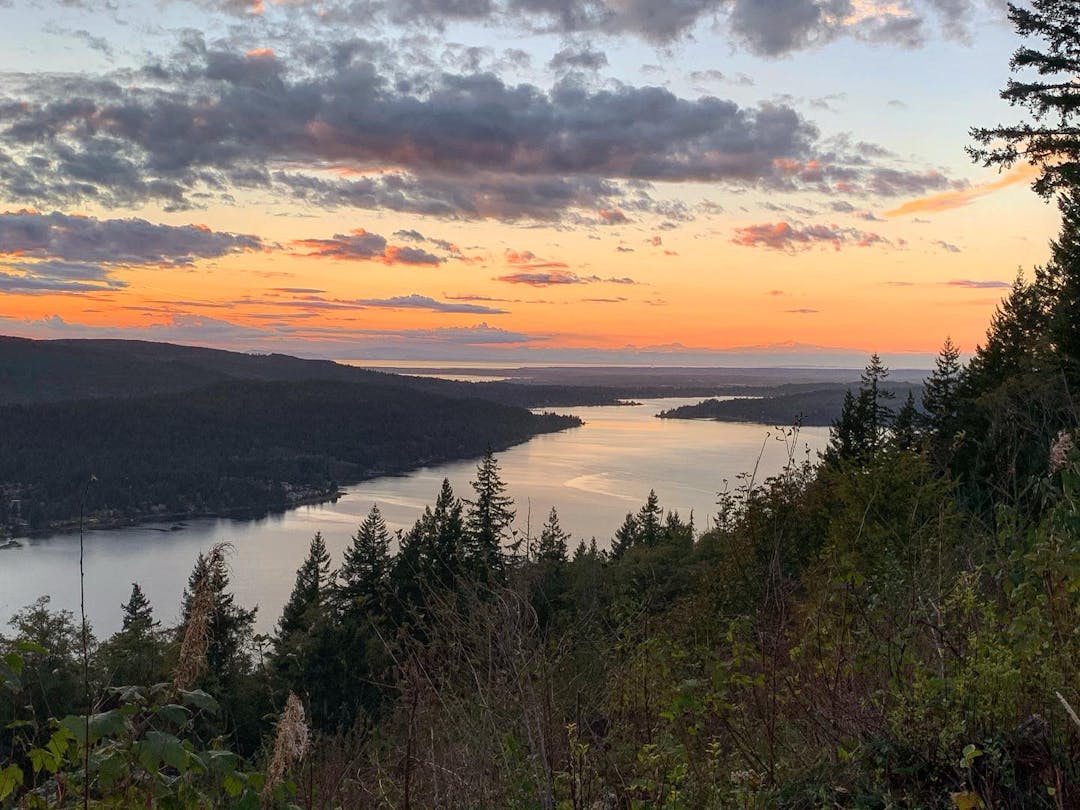
📷 Photo of Lake Whatcom Overlook by Hannah Montroy
Questions
For questions about the plan development process, please add those here and we will follow up.
-
Share I appreciate that financial constraints may suboptimally influence forest management. The video made it clear that it is ideal to have large, drought-tolerant conifers (i.e. doug fir) flourishing. I'm confused why it would be proposed to cut the very trees down that we're trying to help dominate the landscape, especially given that it takes many decades to produce a large, mature confier. It just seems counter-intuitive to remove the very trees (for funding reasons) we're needing the most of, especially if growing those trees takes at least half a century. Aren't we just getting further away from our goal with every doug fir cut to fund these very improvements? on Facebook Share I appreciate that financial constraints may suboptimally influence forest management. The video made it clear that it is ideal to have large, drought-tolerant conifers (i.e. doug fir) flourishing. I'm confused why it would be proposed to cut the very trees down that we're trying to help dominate the landscape, especially given that it takes many decades to produce a large, mature confier. It just seems counter-intuitive to remove the very trees (for funding reasons) we're needing the most of, especially if growing those trees takes at least half a century. Aren't we just getting further away from our goal with every doug fir cut to fund these very improvements? on X (formerly Twitter) Share I appreciate that financial constraints may suboptimally influence forest management. The video made it clear that it is ideal to have large, drought-tolerant conifers (i.e. doug fir) flourishing. I'm confused why it would be proposed to cut the very trees down that we're trying to help dominate the landscape, especially given that it takes many decades to produce a large, mature confier. It just seems counter-intuitive to remove the very trees (for funding reasons) we're needing the most of, especially if growing those trees takes at least half a century. Aren't we just getting further away from our goal with every doug fir cut to fund these very improvements? on Linkedin Email I appreciate that financial constraints may suboptimally influence forest management. The video made it clear that it is ideal to have large, drought-tolerant conifers (i.e. doug fir) flourishing. I'm confused why it would be proposed to cut the very trees down that we're trying to help dominate the landscape, especially given that it takes many decades to produce a large, mature confier. It just seems counter-intuitive to remove the very trees (for funding reasons) we're needing the most of, especially if growing those trees takes at least half a century. Aren't we just getting further away from our goal with every doug fir cut to fund these very improvements? link
I appreciate that financial constraints may suboptimally influence forest management. The video made it clear that it is ideal to have large, drought-tolerant conifers (i.e. doug fir) flourishing. I'm confused why it would be proposed to cut the very trees down that we're trying to help dominate the landscape, especially given that it takes many decades to produce a large, mature confier. It just seems counter-intuitive to remove the very trees (for funding reasons) we're needing the most of, especially if growing those trees takes at least half a century. Aren't we just getting further away from our goal with every doug fir cut to fund these very improvements?
erikkellison asked 11 months agoHi Erik,
Thank you for your question! Here is a response from our consultants at NNRG regarding why we they recommend cutting Douglas-fir in specific instances:
We are only recommending cutting Douglas-fir where the trees grow in stands that we deem to be "overstocked". Overstocking refers to a tree density at which there is a high degree of competition between the individual trees for resources such as sunlight and soil moisture. Overstocking stresses the trees, increasing their susceptibility to drought, insect damage, disease, windthrow, fire, and other natural mortality agents. It is important to understand that we are only proposing thinning Douglas-fir, not clearcutting or wholesale removal of the trees. Thinning will direct more resources to the remaining trees so they are more resilient and the overall stand will have a better ability to meet the desired future condition of "old growth". I would also underscore that there is no economic motive to thinning the trees. Although "commercial thinning" may be used in mature stands, any trees that are cut and removed are simply a by-product of treating the stand for ecological objectives. Much of this thinning may end up being revenue neutral, given the high cost of accessing, thinning, and removing the trees.
-
Share What school district funding will be affected by this decision? on Facebook Share What school district funding will be affected by this decision? on X (formerly Twitter) Share What school district funding will be affected by this decision? on Linkedin Email What school district funding will be affected by this decision? link
What school district funding will be affected by this decision?
J E asked 11 months agoThanks for your question! The Lake Whatcom Forest Management Plan applies only to public forestlands managed by the City of Bellingham and Whatcom County - not to state-owned lands. Since our plan does not involve state trust lands, it will not impact state funding for schools.
-
Share Is it required to make an account in order to comment on the Engage Bham page for the LW FMP? on Facebook Share Is it required to make an account in order to comment on the Engage Bham page for the LW FMP? on X (formerly Twitter) Share Is it required to make an account in order to comment on the Engage Bham page for the LW FMP? on Linkedin Email Is it required to make an account in order to comment on the Engage Bham page for the LW FMP? link
Is it required to make an account in order to comment on the Engage Bham page for the LW FMP?
BettyBoop asked over 1 year agoHi Betty,
Thanks for reaching out! Anyone can provide comments on this Engage Bellingham page without registering. Participants are asked to choose a screen name and provide an email address, but do not have to verify the email address. I hope this helps.
Best,
Stefanie
-
CT
-
MP
-
Ecological Forestry Consultant
NN
-
April - July 2025: Define objectives
Lake Whatcom Forest Management Plan has finished this stageCollect input through community meetings, educational forest tours, focus groups with partners, and online. Community input and data will help define the objectives that will guide the plan's recommendations. A community open house was hosted at Silver Beach Elementary School in May.
-
June - July 2025: Data collection and forest tours
Lake Whatcom Forest Management Plan has finished this stageNNRG collected field data from the County's and City's forested properties in the watershed to understand existing conditions and identify recommended actions. Two educational forest tours were offered to the community in June and July with more than 30 total attendees. Miss the tour? Watch a virtual version!
-
August - October 2025: Write draft plan
Lake Whatcom Forest Management Plan has finished this stageUsing input received and the data they collected, NNRG will write a draft Forest Management Plan with draft recommendations.
-
Fall 2025: Review draft plan and develop final plan
Lake Whatcom Forest Management Plan has finished this stageCommunity members and project partners were invited to provide input on the draft plan through November 20. This input will be used to develop a final Lake Whatcom Forest Management Plan.
-
Q1 2026: SEPA submission and review
Lake Whatcom Forest Management Plan has finished this stageWhatcom County and City of Bellingham submitted the plan to Whatcom County Planning and Development Services for Non-Project SEPA review. The review was completed in April 2026.
-
May 2026: City Council adopt final plan
Lake Whatcom Forest Management Plan has finished this stageBellingham City Council adopted the final plan on May 11, 2026.
-
September 2026: County Council adopt final plan
Lake Whatcom Forest Management Plan is currently at this stageWhatcom County Council adopted the final plan on September 15, 2026.
- Lake Whatcom Forest Management Plan Public Engagement Summary
- November 2025 Draft Forest Management Plan for Public Comment
- Draft Management Recommendations for County-Managed Lands
- Draft Management Recommendations for City-Managed Lands
- Interactive Map of Lake Whatcom Properties
- Lookout Mountain Forest Preserve and Lake Whatcom Park Recreational Trail Plan
- City of Bellingham Lake Whatcom Land Acquisition and Preservation Program
- Whatcom County Lake Whatcom Comprehensive Stormwater Plan
- Lake Whatcom Management Program
- Forest Practices Habitat Conservation Plan (WA State Department of Natural Resources)
Thank you for your contribution!
Help us reach out to more people in the community
Share this with family and friends